My heart rate increased a bit when I read the following…
I am aware that “Amoris Laetitia”, as an apostolic exhortation, does not come under any rubric of infallibility. Still it is a document of the papal ordinary magisterium, and thus it makes the idea of critiquing it, especially doctrinally, mighty difficult. It seems to me unprecedented situation. I wish there were a great saint, like St Paul, or St Athanasius or St Bernard or St Catherine of Siena who could have the courage and the spiritual credentials, i.e. prophecy of the truest kind, to speak the truth to the successor of Peter and recall him to a better frame of mind. At this hour, hierarchical authority in the Church seems to have entered a strange paralysis. Perhaps this is the hour for prophets – but true prophets. Where are the saints, of “nooi” (intellects) long purified by contact with the living God in prayer and ascesis, gifted with the anointed word, capable of such a task? Where are these people?
This is the second paragraph after the opening statement of intent of a talk given by Australian scholar Anna M. Silvas, a Romanian Greek Catholic who teaches at the University of New England and at the Australian Catholic University and who is an expert on the Cappadocia Fathers as well as monasticism, and female asceticism in early Christianity and in the Middle Ages. She also teaches at the Pontifical John Paul II Institute on Marriage and Family in Melbourne.
So, she’s got chops.
In her talk on the Post-Synodal Apostolic Exhortation Amoris laetitia, apparently “delivered before a packed crowd with bishops and priests and then published on the website of the Parish of Blessed John Henry Newman in Caulfield North, near Melbourne” she proposed to:
[O]utline some of the more pressing concerns I have with “Amoris Laetitia”. These reflections are organised into three sections. Part one will outline general concerns; part two will focus on the now infamous chapter eight; and part three will suggest some of the implications of “Amoris Laetitia” for priests and catholicism.
Let’s skip down a bit…
Reading chapter eight
And all that was before I came to reading chapter eight. I have wondered if the extraordinary prolixity of the first seven chapters was meant to wear us down before we came to this crucial chapter, and catch us off-guard. [I had that same exchange with one of my friends. Ehem… IT DIDN’T WORK!] To me, the entire tenor of chapter eight is problematic, not just n. 304 and footnote 351. As soon as I finished it, I thought to myself: Clear as a bell: Pope Francis wanted some form of the Kasper proposal from the beginning. Here it is. Kasper has won. It all explains Pope Francis’ terse comments at the end of the 2015 Synod, when he censured narrow-minded “pharisees” – evidently those who had frustrated a better outcome according to his agenda. “Pharisees”? The sloppiness of his language! They were the modernists, in a way, of Judaism, the masters of ten thousand nuances – and most pertinently, those who tenaciously upheld the practice of divorce and remarriage. The real analogues of the pharisees in this whole affair are Kasper and his allies.
[…]
If that doesn’t get you reading, I don’t know what will.
Maybe this will…
Graven upon tablets of stone by the finger of the living God (Ex 31:18, 32:1 5), the ten “words” proclaimed to mankind for all ages: “You shall not commit adultery” (Ex 20:14), and: “You shall not covet your neighbour’s wife” (Ex 20:17).
Our Lord himself declared: “Whoever divorces his wife and marries another, commits adultery against her (Mk 10:11).
And the apostle Paul repeated the language: “She will be called an adulteress if she lives with another man while her husband is alive” ( Rom 7:3 ).
Like a deafening absence, the term “adultery” is entirely absent from the lexicon of “Amoris Laetitia”. Instead we have something called “‘irregular’ unions”, or “irregular situations”, with the “irregular” in double quotation marks as if to distance the author even from this usage.
“If you love me”, says our Lord, keep my commandments (Jn 14:15), and the Gospel and Letters of John repeats this admonition of our Lord in various ways. It means, not that our conduct is justified by our subjective feelings, but rather, our subjective disposition is verified in our conduct, i.e., in the obediential act. Alas, as we look into AL, we find that “commandments” too are entirely absent from its lexicon, as is also obedience. Instead we have something called “ideals”, appearing repeatedly throughout the document.
Ah yes… read the whole thing HERE.
“Where are these people?”, she asked at the top.
They are out there, friends, and they are rousing themselves and finding their paths to each other.
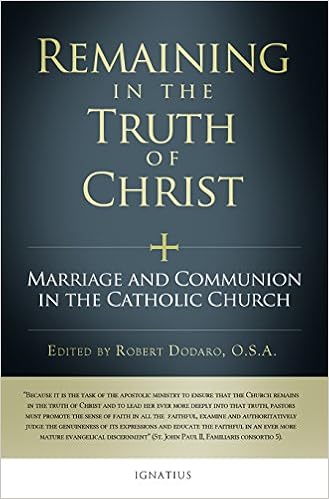
I think that the famous Five Cardinals Book™ – Remaining in the Truth of Christ – will eventually be seen as an important marker in this fork in the road for the Church. US HERE – UK HERE ITALY HERE
If I am reading the stars and tea leaves and windy skies and entrails properly, I think we will see some great figures rising up.
“True” prophets.
They won’t come from the Fishwrap, or the Bitter Pill, or Amerika types. They won’t come from the “Olympian Middle” either (and you know whom I intend).
NB: Don’t miss her peroration.
PS: The moderation queue is ON. Don’t post comments that haven’t been thought through and filtered. Remember that YOUR comments – in the eyes of some – reflect also on me. Some venting I can allow, but spewing and thoughtless lashing out I will not. This isn’t the Fishwrap.