A couple days ago I asked someone to send me the text of a piece in The Catholic Herald and, just I hoped, one of you responded! Thanks. I found this bit from a piece by Stuart Reid, the Deputy Editor of The Spectator, highly amusing. I reminds me of other pieces I have seen in which wags start talking about indult Masses for use of the lame-duck ICEL translations! Read this in light of the news that the new English Mass translation is coming and the Motu Proprio derestricting the old Mass in imminent. My emphases.
I suspect it can’t be long now before someone starts an English Mass Society to preserve the old, inclusive translations – soon to go – and the extemporised informality that has marked Sunday worship these past 30 years.
As someone who has been through the liturgical protest mill, I can see it all now: old New Masses, for which the EMS would have to obtain an indult, would typically be celebrated on the first Tues days of the month, at 7.30 pm (or 6 am), in bingo halls and railway hotels and the front parlours of pebble-dash bungalows in the more distressing parts of Essex. After Mass, the faithful would drink filthy coffee and indulge in paranoid gossip. [This seems to be a shot at the hard-core among the "trads", who are often happy only when they are unhappy.]
But there is nothing more tiresome than trad triumphalism. A good friend of mine, a former chairman of the Latin Mass Society, has identified a new heresy – liturgism – in which biretta-doffing (or guitar strumming) is placed above Christ and the dispossessed. [He has a good point.]
The Pope would no doubt agree. Sacramentum Caritatis is not just about Latin and sanctuary lamps, kneeling and sexual continence; it is also about the environment and the poor and oppressed.
Traditionalists, if they are to be true to tradition, should not forget Catholic social doctrine. It is part of the deposit of the faith. If they yield to "liturgism" they will be left with nothing more than a heritage liturgy, in which good taste and expensive handbags trump all. [This is a real shot at the "trads", whom he perceives as being detached from the Church’s active life of works of mercy.]
I must make a few observations.
The incredible fabric of hospitals and schools, charitable institutes and the social doctrine of the Church was formed when the so-called "Tridentine" Mass was in use. This was the Mass that shaped the foundresses of orders and sisters who cared the poor, brothers who served as missionaries, the laity who sacrificed to build churches and schools. The post-Tridentine era saw an explosion of confraternities of layman dedicated to works of mercy.
If one desires to have the pre-Conciliar liturgy, one ought also be consistent and be engaged in the whole life of the Church on the model of those who have gone before us.
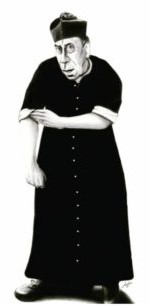
However, that is not always how "traditionalists" are perceived. They are perceived by many to be dour, disgruntled sorts of people who are in a siege posture. That is more often than not an unfair characterization. It is not always unfair however.
The author above expresses distaste at "trad triumphalism". Let this be a very important point of reflection for us.
It is going to be deeply satisfying (I will drink Veuve Clicquot, I think) in many instances to see some of the real enemies of the older form of Mass, who are staunchly denying any possibility of the derestriction to come. But it will be satisfying mainly because the hermeneutic of continuity has triumphed, not because someone else has been embarrassed.
Let us take this to heart.
In the meantime, here are
1) Rejoice because our liturgical life has been enriched, not because "we win". Everyone wins when the Church’s life is enriched. This is not a "zero sum game".
2) Do not strut. Let us be gracious to those who have in the past not been gracious in regard to our "legitimate aspirations".
3) Show genuine Christian joy. If you want to attract people to what gives you so much consolation and happiness, be inviting and be joyful. Avoid the sourness some of the more traditional stamp have sadly worn for so long.
4) Be engaged in the whole life of your parishes, especially in works of mercy organized by the same. If you want the whole Church to benefit from the use of the older liturgy, then you who are shaped by the older form of Mass should be of benefit to the whole Church in concrete terms.
5) If the document doesn’t say everything we might hope for, don’t bitch about it like a whiner. Speak less of our rights and what we deserve, or what it ought to have been, as if we were our own little popes, and more about our gratitude, gratitude, gratitude for what God gives us.