England’s lefty fly-paper The Tablet has in their recent number an article by Andrew Cameron-Mowat, SJ. Cameron-Mowat, whom I must henceforth reduce to CM, attacks people who want translations according to the norms of Liturgiam authenticam as well as those who have what John Paul II described as "legitimate aspirations" for the older form of liturgy, that is, the "Tridentine" Mass.
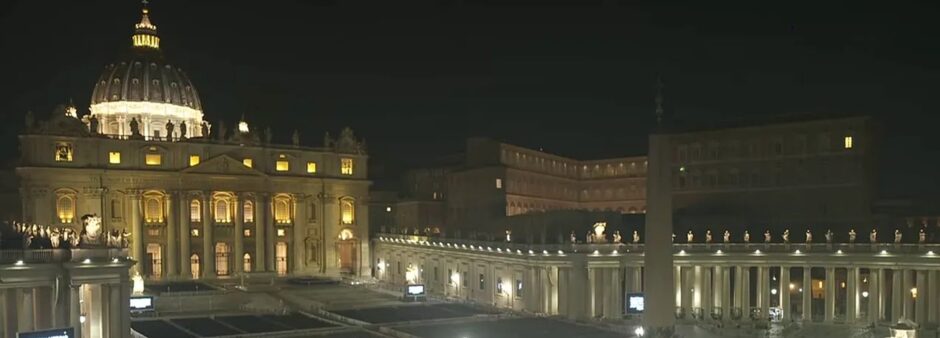
 I went to CM’s webpage and found what we must regard his ideal for papal liturgy. It is one of those wretched scenes we endured under the previous pontificate when H.E. Piero Marini was able to do as he pleased, including the introduction of semi-nude Samoan (?) spear-bearers around the very altar of St. Peter’s Basilica. This is his ideal of inculturation, I guess, though I sure hope I am wrong. CM’s CV, who is presently on the faculty of Heythrop College in London, studied mainly at Weston Theological Union and then Berkeley. His bioblurb in The Pastoral Review, no doubt penned by CW himself, says he is "a liturgical musician" and that his been his ministerial emphasis. There is an old chestnut that a man can’t be at the same time a good Jesuit and a good liturgist. As for Jesuit liturgical musicians… well… gosh they have given us so much, haven’t they.
CM is heavily into inculturation, in what I think is the mistaken sense of the term (that is, putting what the world has to offer in logical priority to what the Church has to give). In an article in the Oct. 2004 The Pastoral Review he wrote (just to give you a taste of what he is all about before getting to the rank piece in The Tablet). My emphases and comments:
The process of inculturation in liturgy seems to have slowed down or even stopped [HUZZAH!], and we are in danger of losing the proper meaning of the phrase ‘in substantial unity with the Roman Rite’, replacing it with ‘completely identical to the Roman Rite’. For writers steeped in the issues concerning inculturation, there needs to be a radical rethink of what is required. For the Benedictine liturgical scholar Anscar Chupungco, the revision of the books was only a first step, and there is still more to be done ….
Let us pray for an end to squabbles about who stands where, when; about pottery or metal vessels; about word order and inclusive language; about vestment colours; about the placement of tabernacles; about the difference between ‘special’ and ‘extraordinary’. These are preventing the Church from moving forward into a truly inculturated way of celebrating the liturgy, in which the word is worthily proclaimed and preached, in which the risen Christ raises our spirits in unity and peace, in which the world can be transformed by our joy and hope in the risen Christ and in the power of his Spirit.
Does CM not want to use the Roman Rite, as is in the Missale Romanum? Even the newest edition? Apparently not. And in that list of things we shouldn’t be squabbling about, which are you guessing he might favor?
"Let us", he wrote, "pray for an end to the squabbles". And yet his piece in The Tablet is nothing but a tendentious sneer at anyone who either desires traditional forms or dares to voice an opinion that is out of set with the liturgical gnosticism of which he is a priest…er um… ordained minister.
First, in his piece CW invokes the "Catholic imagination" more than once to describe to what he deems is the proper approach to liturgical progress. Anyone who want the older forms of liturgy are too dim to understand the "Catholic imagination". CW never really says what the "Catholic imagination" is, which leaves us supposing that he is its arbiter. He lists several of the scholars he considers to be of "titanic significance" at the Second Vatican Council, and who are I suppose therefore important for those who have the proper "Catholic imagination" concerning liturgy. Here is his list: "de Lubac, Congar, Jungmann, von Balthasar, Chenu, Rahner." Anyone missing from the list? Joseph Ratzinger? He then includes of a list of liturgists whom he risibly claims could not even remotely be thought of as "revolutionary": "Clifford Howell, James Crichton, Edward Yarnold, Godfrey Diekmann, Fred McManus, Robert Hovda, Aidan Kavanagh, Robert Taft."
A major starting point for CM is this: "The renewal of the Vatican Council is not essentially a break with our liturgical past but preserves a deep Christological and sacramental mysticism and spiritual experience that has been
central to the Church’s life and thought. That is why, for example, there can be only one Roman Rite within our living tradition."
This means that, for CM, what resulted in the reforms after the Council in no way constitutes a break with the pre-Conciliar tradition. This is pretty much the opposite of the opinion of many liturgical scholars who didn’t make it onto CW’s selective list (including Pope Benedict XVI). I think his statement also begs a serious question: If the renewal CM describes has been so deep and spiritual, where are the fruits of the renewal?
Let’s move along. Remember that CM says he wants an end to squabbles. He thus identifies the culprits who are out of step with the "Catholic imagination" he embraces. "There seems evident to me in publications by certain ordained ministers and others who have joined our tradition a lack of experience that misrepresents the actual liturgical practice existing before the Council. Inevitably, this leads to a failure to appreciate the issues, concerns and problems that the great pastoral liturgists of the period faced, considered and tried to deal with in the liturgical reform. There have been indications of problems for several years. One example is the demand for a partial version of the “full tradition”, including the Mass and the other sacraments whose old rituals were abrogated (replaced) by Paul VI more than 30 years ago."
NB: He is taking issue with some priests and converts who like traditional liturgy. I wonder who he might be talking about?
While I wholeheartedly agree that some traditionalists have so idealized the past that they now lack any common sense in their positions, what CM is really saying is that if you are not old enough to have lived before the post-Conciliar renewal, or if you are – GASP – a convert, you lack the experience which authorizes you to have an opinion or a preference about pre-Conciliar liturgy. The conclusion is that if you want the pre-Conciliar liturgy, then you are out of step with his "Catholic imagination" and, probably, you are just plain dumb. He reduces these people, together with converts, to second class citizens in the Church. In fact, he "marginalizes" them.
CM makes the claim that the so-called "Tridentine" form of Mass was abrogated, which he interprets as "replaced". "Replace" for abrogate is in keeping with the very finest tradition of the older, lame-duck ICEL translations CM elsewhere defends. To abrogate means to abolish, not replace. Abrogation means that it may never be done again, it is finished, and you cannot appeal to custom to continue doing something. On the other hand, immediately after issuing the Novus Ordo Missale Romanum, Paul VI issued permissions for the older Mass to continue in some cases. This was expanded greatly by John Paul II in 1986 and 1988. It is going to be expanded again by Pope Benedict some time soon. People like CM are clearly upset by his lack of "Catholic imagination". Never mind that various Prefects of Congregations have said that the older form of Mass was not abrogated. In CM’s "Catholic imagination" it has been.
Take careful notice of CM’s use of the phrase "ordained minister". Back in my dark seminary days in the USA we were forbidden to refer to priests or priesthood. Rather, we were instructed that we were in formation to be "ordained ministers". Thus we were put in classes alongside those who were being formed to be "non-ordained ministers". This leveling of the concept of "minister" is telling. The chief priest of the "ordained minister" terminology is probably Edward Schillebeeckx, O.P., who strove to eliminate real ontological distinctions between the priesthood of the baptized and that of the ordained.
CM then launches an salvo against people who differ from him on the meaning of "active participation". In WDTPRS I have spilled a lot of electrons and ink about this term, actuosa participatio. CM says, "There have been some attempts to rewrite liturgical history by those who claim that “participatio actuosa” means “real participation” (which it doesn’t, or at least, not in the way they claim it does)…". CM doesn’t tell us what it means, of course. That must be part of the "Catholic imagination" he similary leaves unexplained. But then I am a convert and one of those ordained ministers who lacks appreciation of CM’s liturgical gnosticsm.
The article also offers a defense of the efforts of H.E. Donald W. Trautman to block or undermine the continuing preparation of a new English translation according to the norms (not "imagination") of Liturgiam authenticam. He labels the vocabulary being used in the new translation (e.g., "deign, "graciously grant", consubstantial") as "pretentious". To my imagination, only people can be pretentious, not vocabuarly. He grumbles around for a while about "Anglo-Catholics, who must be pretty awful, and then says, still in reference to the new translation: "There is also the fallacy of thinking that an artificially antique language communicates, and that it communicates transcendence or mystery. It may only communicate artificiality and oddity." I must respond saying, better oddity, which might stir interest, than the vapid and uninteresting drivel we have had for the last 30+ years. If the style of the lame-duck ICEL versions constitute a touchstone of CM’s "Catholic imagination", then I will opt for some other vision, thank you.
Finally, we arrive at the social-activism prong of CM’s attack on traditionalism which, oddly, he seems to be extended even to the current edition of the Missale Romanum. This is classic museum-piece liberal stuff. Note again his mistake in saying the older form of Mass was abrogated:
We need to reassert our commitment to the whole of liturgical history and to the movement for liturgical development in its entirety; we cannot be held hostage by those who claim the agenda is solely about a particular version of the Roman Rite, which Paul VI abrogated over 35 years ago. There is so much to do with future developments of the Roman Rite that we need to move on. There are serious pastoral questions yet to be faced. How do we respond to the call for a deeper understanding of post-colonial liturgy? Do our celebrations have underlying structures that oppress minorities, particularly people of other races, the powerless, the marginalised? In what ways can and should the liturgy respond to those whose hunger for Christ is not being met in our present celebrations? How can preaching truly make present Christ as he speaks from the ambo?
"Held hostage"? Wow. I guess we the unimaginative who failure to appreaciate the issues are pretty powerful after all.
CM’s peroration shows that he desires to re-write the Novus Ordo according to his Catholic imagination.
Frankly, although he defends the dubious continuity of the pre-Conciliar and post-Conciliar rites with one side of his mouth, he appears to want to eliminate anything Roman, or perhaps European or Western. For CW I think we can assume that something appropriately "post-colonial" will be open to all manner of local adaption according to his imagined "inculturation". Liturgy is thus to be an instrument of social change, of realization of the marginalized (except for the liturgically benighted who desire older forms of liturgy). He comment about preaching ("from the ambo"), in this context, suggests that those same marginalized poor and oppressed are probably supposed to be at that ambo preaching in place of the clergy. I’ll just bet he holds to that, too. If that is true, then I would respond with what the CDW wrote in Redemptionis Sacramentum. The CDW understands what abrogate means:
[65.] It should be borne in mind that any previous norm that may have admitted non-ordained faithful to give the homily during the eucharistic celebration is to be considered abrogated by the norm of canon 767 §1. This practice is reprobated, so that it cannot be permitted to attain the force of custom.
At any rate, CM, who says we need to stop the squabbling, has done little more than insult and pick a fight with anyone who values the use of pre-Conciliar forms. He shows that he is completely out of step with the mind of Pope Benedict, who has called for a "hermeneutic of continuity" rather than of disunity, in considering our history, present state, and view of the future. He has without question provided a public example of disrespect for those whom John Paul II in Ecclesia Dei adficta required respect by his "apostolic authority".
Using my Catholic imagination, his article gives me the impression of someone who knows he is now on the wrong side of the changing tide.
Can’t we all just not get along?