The Vetus Ordo is not going away. No matter how much pressure and repression, no matter how much persecution of priests and marginalization of lay people certain “shepherds” apply, it will remain and grow stronger in ways they fear more than anything but bankruptcy. And I am not talking about their squandered moral capital.
Mind you, what you will see in this video, can be applied, and ought to be applied, to the Novus Ordo and the churches where it is celebrated.
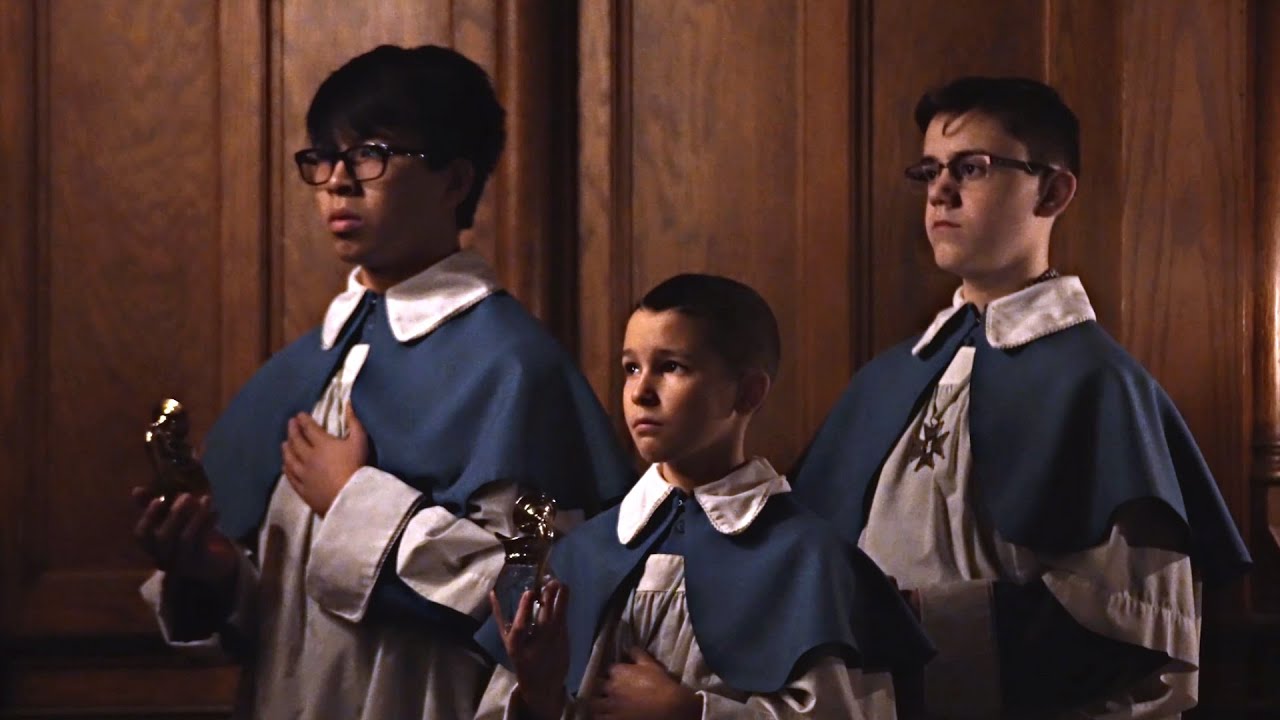
You will see beautiful vestments and their restoration. Check. The installation of important sacramental architectural elements. Check. Eucharistic processions. Check. First Communion. Check. Incense swathed sacral glimpses. Check. Candles and lace and flowers and bells and chapel veils and choral music … and … and. Check.
Right away people will ask, “If that can all be done with the Novus Ordo, then why not just have the Novus Ordo?”
Right away we respond, “If the Novus Ordo is better the more it is enriched by what the Vetus Ordo can give it, then why not just have the Traditional Latin Mass?”
The longer response is deeper and has to do with a perceived– by some – theology, especially claims made about the theology of the Church, ecclesiology, of Vatican II. The longer response entails getting into the “Paschal Mystery” (Passion and Death and Resurrection and Ascension) and the “People of God”.
Suffice to say that, by a shorter answer, the Vetus Ordo already has both of those things and, I think, in a way more complete than the perceived ecclesiology of Vatican II.
For example, in the matter of the Paschal Mystery, in the prayers of the Novus Ordo those things having to do with the Passion and Death of the Lord (propitiation, guilt, sin, sacrifice) were systematically excised so as to emphasize the Resurrection and joy of Heaven to come. The problem is, you can’t have Resurrection without the Passion and Death. To get to Heaven we have to deal with propitiation, guilt, sin, and sacrifice in a serious way. The Vetus Ordo handles this with a healthy and commonsense emphasis, which sounds today to some people as heavy handed but only because they’re ecclesiology, picked up from the way they have been worshipping for decades, is heavily sprinkled with daisies and kitties and affirmation without judgmentalism by friendly “Just call me ‘Bob'” presiders.
Oh, yes… the shifted content of the Novus Ordo orations, too. Are the Novus Ordo prayers bad. No. They, cumulatively, just give you part of what you need. We should have all of it. IT… the Catholic Thing… the complete Paschal Mystery… the whole megillah.
We are our rites. The way we pray has a reciprocal relationship with what we believe. Change the one, and the other will inevitably change.
So, by all means, everything in the video ought be applied to the Novus Ordo also.
That doesn’t mean everything has to look the same everywhere.
What it means is giving our churches and our liturgical worship the very best that we can humanly imagine and making sacrifices so that it will be so. Across cultures and economic divides… the best we can do.
Is the Novus Ordo, ultimately, the best we can do? I am not sure that the commonly cited stats hold up when we consider that.
Hence, maybe we need the Vetus Ordo to get back our bearings, back to our roots, … to get It back, that Catholic Thing.
The video has a in medias res feeling and, by the end, we are left with a deep desire to have seen the part that preceded and what followed, … at least from the beginning of the Lauridsen, O Magnum Mysterium. Are there motets more beautiful that that? Convince me.