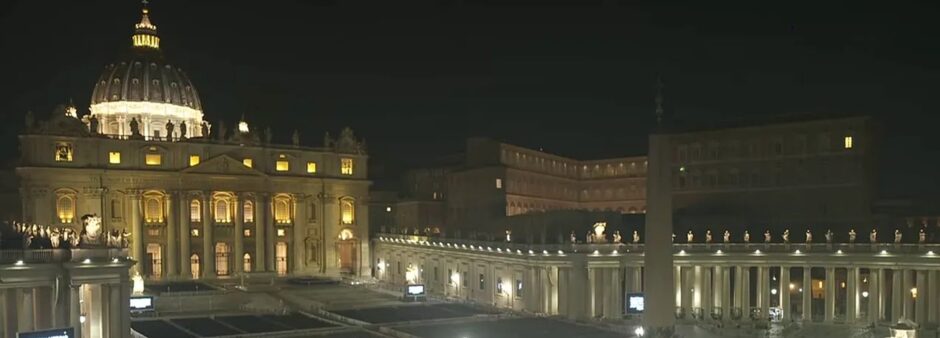
 You might have read that the Vatican’s increasingly strange newspaper L’Osservatore Romano had a fluff piece on that famously "Catholic" movie The Blues Brothers.
I like The Blues Brothers. After all these years it still makes me laugh… perhaps because it reminds me of my youth… but I digress.
I didn’t post about this little trip to the zoo by L’Osservatore Romano when it came out because I a friend of mine in Italy was preparing an English translation of the pieces.
Sorry about this, but here they are.
To make this more substantive, feel free to add your favorite Blues Brothers lines and moments in the combox together with your comments on these quirky articles.
I can attest that my friend enjoyed the When we were traveling through Chicago we made sure to stop for a photo-op at the Cook County Courthouse. For the record, here are the pieces on , for your disedification (from the original Italian by a guest translator):
On a mission from God (and cinema) by Emilio Ranzato
You don’t enter myth by chance. If still today a black suite and a pair of black sunglasses will sooner recall the John Belushi-Dan Aykroyd duo rather than Quentin Tarantino’s Reservoir Dogs or the alien hunters of Men In Black it’s because under its breezy surface The Blues Brothers reveals itself as an incredibly shrewd and insightful piece of work. As is often the case with masterpieces, it is a mix of different influences catching a series of elements that were going to impose themselves in the following years. First of all, them: Jake and Elwood. Brothers without a family or real ties. And even without a real job. A perfectly autonomous splinter cell wandering about America like a drifting mine. Always dressed the same, almost always inexpressive, their mask fits perfectly the early ’80’s trend in American film-making. The re-born Hollywood industry on the one side, and Reagan’s will to reconsolidate the ideological home front on the other side by discouraging dissenting or too politically oriented voices secured the triumph of disengaged cinema centered on extremely distinctive characters and as iconographic ones as comics superheroes, with which they shared even special powers and abilities. It was the season of Star Wars and E.T., of Indiana Jones and the time-travels of Back To The Future, of Ghostbusters and the nasty Gremlins, of the endless sequels of Rocky and the lone-warriors like Rambo – the only concession to more serious issues in theory, but in fact with nearly grotesque implications and strongly patriotic anyway.
John Landis’ movie is part of the same genre as evident by the presence of Princess Leila/Carrie Fisher as Jake’s bellicose former fiancee, as well as Steven Spielberg’s cameo at the end of the movie. But while The Blues Brothers took advantage of such a trend towards rather childish blockbuster productions, at the same time it satirized them, also by adding another ingredient of great success in that time’s cinema: the surreal comicality that will make the fortune of the demential subgenre of movies like Airplane! but is also traceable back to a noble tradition of comic cinema, as that of the Marx brothers and even to the old slapstick – that is the physical comicality of silent movies – from which the characters derived their anarchical ability to destroy everything on their path.
“Where’s the Cadillac? The Caddy? Where’s the Caddy?”, Jake asks Elwood in one of the first scenes of the movie. “I traded it” is Elwood’s answer. “You traded the Bluesmobile for this?” says Jake of the police car with which his brother – very tactfully – has just picked him up at the prison. “No. For a microphone”, explains Elwood. “A microphone?!?” insists an increasingly disconcerted Jake, only to conclude:”Okay, I can see that.” Such an exchange sets the tone of the whole movie from the onset. No wonder that they will later emerge from the rubble of a building and say “It’s almost nine o’clock. We gotta go to work”, after having brushed themselves off quickly. Or when they’ll speed away from police cars through a shopping mall while commenting on the items for sale .
Yet Landis’ movie didn’t let itself be absorbed so much by this extreme humor which was limited to the main characters as it did strive to outline a credible scenario, starting with an urban setting open to notes of almost documentary realism thus creating a daring but highly effective contrast. Above all, the movie provided the stylized duo with an absolutely original subject, with little in common with comic cinema. A close look will reveal themes of considerable depth which by the way help making sense of the Catholic context represented by the orphanage run by nuns and by the “mission from God” they are committed to. There’s the theme of the return of the prodigal son, of redemption, to be achieved through sacrifice, of proselitism, when they rescue the old members of the band from frustrating and embarrassing situations to bring them back to their true vocation. Especially the latter is a theme that follows a pattern of art films like Seven Samurai, but is also reflective of a main theme of the American movie narrative, that is the redemption of the lost soul that runs through the history of the silver screen from The Searchers to Taxi Driver. Besides, The Blues Brothers is of course a great musical, daringly produced with largeness of means at a time when only to mention such genre was cause for sneer among the public. While dance numbers are few and sketchy, the whole movie is underpinned with a choreography made of the steady rhythm of images, of the visual, almost pyrotechnical rendering of the destructions in which the characters indulge, the appearances of an impressive series of stars of black music in perfect sync with the narrative phases of the plot. As to how all these ingredients manage to blend in a coherent body, that’s the mystery of masterpieces. Without a doubt, beside the unforgettable Belushi, much credit must be given to two underappreciated talents like Landis and Aykroyd. Despite having authored only comedies and having soon gone down a descending parable, the former has been a true author, at the same time an innovator and an expert of the old cinema, as demonstrated by his classical but fast-paced and inherently musical language. The latter, who co-authored the screenplay with the director, has been a versatile actor who was also nominated for an Academy Award for Driving Miss Daisy (Bruce Beresford, 1989) – after having revolutionized American TV as author of the Saturday Night Live Show. The parable of the Blues Brothers will then end where it started: in jail, on the notes of Elvis Presleys’ very appropriate Jailhouse Rock. But only after having completed their two-fold mission: saving the orphanage and entering the history of cinema.
Let’s pause here for a favorite Catholic moment – in Italian – from The Blues Brothers!
[youtube:http://www.youtube.com/watch?v=f3tOIoCo_jg&NR=1]
And now back to the Editor of L’Osservatore Romano, whom I thought I knew…
A Catholic movie, by Gian Maria Vian
Is The Blues Brothers a Catholic movie? Clues abound in a production where details are in no way accidental, starting with a framed picture of a young and strong John Paul II in the house of “Blue Lou” Marini’s landlady, black-robed and with a Sicilian accent, and therefore Catholic. Doubtlessly Catholic like Alan "Mr. Fabulous" Rubin, of Polish descent and especially like the brothers Jake and Elwood Blues. And it is their most implacable foes who note it, the detestable Illinois Nazis.
As a matter of fact Jake and Elwood grew up at the orphanage dedicated to St. Helena and the Holy Shroud – run by the scary but in her own way loving Sister Mary Stigmata, aka “The Penguin” – now at risk of closing because of $5,000 in unpaid taxes. But for the two of them that Catholic institution – in whose basement the old clerk Curtis used to play the blues harp for them, as they recall fondly – is all their family and so they decide to save it and its little guests whatever it takes. But how to do that without going too much astray from the values instilled by the nuns and still held as valid despite the occasional transgression? The light from above comes at the Triple Rock Baptist Church to where Curtis directed them and where they hear a sermon by Rev. Cleophus Brown on the need to make good use of one’s own life. And it will be precisely the Protestant cleric to acknowledge Jake’s change (“You have seen the light!") which unleashes a charismatic rock wave among the congregation and most important will lead the brothers to reunite “the band” to raise the money necessary to save the orphanage. When with the little orphans – and “The Penguin – the brothers are capable of moving attentions: for instance Elwood does not forget the cheap cheese cream an elderly friend had asked for and there’s nothing more important to them than “the mission from God”- Elwood will even renounce a date with a charming girl for it – and the mission eventually succeeds thus giving the history of cinema and music a memorable, and in fact Catholic movie.