UPDATE: 19 June 1703 GMT:
Remember New Math?
3. I don’t really pay enough attention at Mass to notice how good or bad the translations are.
Agree 1%
Disagree 96%
Other 9%
__________
ORIGINAL POST
__________
Erie’s Bishop, His Excellency Most Rev. Donald W. Trautman, that inveterate champ of inclusive language and enemy of the Holy See’s norms for liturgical translation, continues his campaign against the revision of the translation of the Roman Missal abetted by US Catholic.
The piece in US Catholic, offered online on 16 June, is recycled. I looked at it already here. US Catholic was conducting a poll about the new translation, with Bp. Trautman’s piece as a preface – probably to condition the voters toward a certain kind of response.
I will look again at the first part of the recycled Trautman piece, and then cut away to the poll results US Catholic produced.
My emphases and comments.
Lost in translation [I wonder how many times by now that has been used.]
Wednesday, June 16, 2010
By Meghan Murphy-GillBishop Donald Trautman
Why the new Mass prayers may be confusing. [By which he is suggesting that they are. ]
I was leading a group discussion on the merits of the renewed liturgy of Vatican II [Where do you suppose he was leading them?] when John, a middle-aged businessman, commented, “I can’t imagine my life without the liturgy; it strengthens me each week—but I never understood the Mass until we had it in English.” [I think it is an amazing thing to be able to "understand" Mass, given that it is a great mystery.]
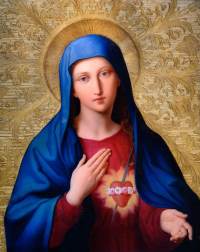
Some in the group said the liturgy was why they became Catholic; others said the liturgy was why they stayed in the church. All of these individuals had experienced the power of the liturgy to transform lives. That liturgy is about to undergo a face-lift [Hmmm… a good image?] with a new translation of the texts for the Mass.
What prompts this new translation? In 2000 Pope John Paul II authorized a new edition of the Roman Missal, the book that contains the texts of the Mass. The new translation of it is slated to be ready for use next year.
In 2001 the Vatican Congregation for Divine Worship and the Discipline of the Sacraments issued new principles and directives for translating from the original Latin into the vernacular in a document called Liturgiam authenticam. Following these new norms, the translation of the new Missal has intentionally employed a “sacred language,” [This has been a real problem for Bp. Trautman, who has implacably asserted that sacred liturgy should not have sacred language. Rather, it should be every day and immediately apparent to all present. Since he works from a premise that average people in the pews can’t understand very much, the language bar has to be set pretty low.] which tends to be remote from everyday speech and frequently not understandable. For example, the Preface, or opening of the Eucharistic Prayer, of the Assumption says of Mary’s delivery of Jesus: “She brought forth ineffably your incarnate Son.” [HUZZAH! Had His Excellency not at some point used the word "ineffable" in some form, I would have had to add it myself. "Ineffable" is a major stumbling block for the good bishop.]
When the bishops at the Second Vatican Council made the historic decision that the liturgy of the church should be in the vernacular, [No, Your Excellency. The Council made the decision that the liturgy was to remain in Latin. (SC 36) Mass was to remain in Latin. The Fathers said that there were some circumstances in which the vernacular could be used, but that the liturgy was to remain in Latin. Clerics and religious were to say their Office in Latin. (SC 101) Pastors of souls were to ensure that their flocks could sing and speak those parts pertaining to them in Latin. (SC 54) Gregorian chant, which is in Latin, must have primacy. (SC 116)] there was no mention of sacred language or vocabulary. [This is risible. If someone had suggested to the Fathers of the Council that non-sacral, banal, an everyday style of language should be used in the sacred liturgy, they would have been laughed out of the Basilica.] The council’s intent was pastoral — [Though we don’t know what that means, exactly.] to have the liturgy of the church prayed in living languages. [Bp. Trautman repeats this often and forcefully every time he addresses this question. The Council’s intent was that the language of liturgy remain in Latin Can H.E. produce a citiation from the Counci’s documents to the contrary? Some text that contradicts the clear requirement of the Council Fathers in SC 36?] Translated liturgical texts should be reverent, noble, inspiring, and uplifting, but that does not mean archaic, remote, or incomprehensible. While the translated texts of the new Missal must be accurate and faithful to the Latin original, they must also be intelligible, proclaimable, and grammatically correct. Regrettably the new translation fails in this regard. [What Bp. Trautman has done here is set up a false dichtomoy, a fictitious contradiction between "sacred" and "pastoral". On his planet, the "sacred style" derived from the norms of Liturgiam authenticam is opposed to "pastoral".]
Did Jesus ever speak to the people of his day in words beyond their comprehension? Did Jesus ever use terms or expressions beyond his hearer’s understanding? [ALL THE TIME! He had to go back constantly and explain things!] Jesus did explain the parable of the sower privately to his disciples in Mark (4:10-12) and Luke (8:9-10). In John 6 many of Jesus’ disciples found his Bread of Life discourse hard to accept. In these instances it is the message—not its vocabulary—that required further explanation. [His Excellency is merely recycling now. We have examined this less than worthy argument before. ]
[…]
[At the very end of his piece, Bp. Trautman offered this, which in fairness must be included.]
With the recent approval of the text of the new Missal, the real task begins. It will then be incumbent on bishops and pastors of the church, along with others in liturgical and educational ministries, to catechize and convince the people that the new Missal is an improvement on the current one.
[But then he adds….]
Is that completely true?
And the survey says…
[A note on the survey results: There is at least one thing U.S. Catholic subscribers and uscatholic.org visitors agree on: They are concerned about liturgy. Fewer than 1 percent said they don’t care enough to have an opinion on the new translations. But their enthusiasm plays out in very different opinions on the language of the Mass.
Nearly 90 percent of subscribers [Note this distinction…. "subscribers".] said they prefer the Mass in an easy-to-understand translation of the Latin, but only 15 percent of more than 3,500 who responded to a quick poll on uscatholic.org feel the same way.
Why the difference? [NB:] The number of respondents to our monthly online quick polls usually spikes when various Latin Mass advocates link to them from their blogs — especially when we ask for opinions on the liturgy. Some of these Latin enthusiasts also took the whole survey, thereby skewing the results to be less reflective of our regular readers. [Why are people who want Latin "enthusiasts"? Why when they respond to an open poll do they "skew" a poll?]
[And since the results were not what the editors wanted…] For the print magazine, we chose to highlight only the responses of 477 U.S. Catholic subscribers. [ROFL! People who subscribe to US Catholic are mostly liberals!] Those results are shown here, but we’ve also included the results of everyone who took the survey, both online and in print. [This should be interesting]]
Total results:
1. I think the new texts for the Mass will be:
A regrettable change and worse than the current texts. 40%
A welcome improvement over the current texts. 52% [majority]
Not much better or worse than the current texts. 3%
Nothing I care too much about. 1%
Other 4%2. I think the new translations are part of an attempt to roll back the liturgical reforms of Vatican II.
Agree 54%
Disagree 34%
Other 9%3. I don’t really pay enough attention at Mass to notice how good or bad the translations are.
Agree 1%
Disagree 96%
Other 9%
[106%!]4. I would prefer that the Mass be prayed:
In a translation that is in natural, easy-to-understand English. 55% [What a surprise!]
In a translation that is as literal as possible. 14%
In Latin. 24%
Other 7%5. More elevated language will help restore a much-needed sense of mystery to the Mass.
Agree 43%
Disagree 51%
Other 6%6. I worry that young people and those considering joining the church will be turned off by a liturgy that sounds esoteric or out of touch to their ears.
Agree 52% [Again, I am shocked!]
Disagree 42%
Other 6%U.S. Catholic Subscribers only:
1. I think the new texts for the Mass will be:
A regrettable change and worse than the current texts. 81% [ROFL!]
A welcome improvement over the current texts. 7%
Not much better or worse than the current texts. 6%
Nothing I care too much about. 1%
Other 5%2. I think the new translations are part of an attempt to roll back the liturgical reforms of Vatican II.
Agree 81% [ROFLOL!]
Disagree 14%
Other 5%3. I don’t really pay enough attention at Mass to notice how good or bad the translations are.
Agree 2%
Disagree 95%
Other 3%4. I would prefer that the Mass be prayed:
In a translation that is in natural, easy-to-understand English. 89% [Hoot!]
In a translation that is as literal as possible. 4%
In Latin. 3%
Other 4%5. More elevated language will help restore a much-needed sense of mystery to the Mass.
Agree 10%
Disagree 81% [They are nothing, if not consistent.]
Other 9%6. I worry that young people and those considering joining the church will be turned off by a liturgy that sounds esoteric or out of touch to their ears.
Agree 82% [Disaster looms.]
Disagree 10%
Other 8%