 We had a look at the phrase "In necessitatibus unitas…", etc. often but falsely attributed to St. Augustine of Hippo. Someone asked about another famous phrase attributed to the Bishop of Hippo, "He who sings, prays twice". Augustine didn’t write that either! Let’s look at it.
First, the original phrase is in Latin and the modern language versions leave out an extremely important little word: bis orat qui bene cantat… "he who sings well prays twice." I think any of you who attend parishes with sub-optimal pop-bands at Mass understand this.
So, if Augustine didn’t write that phrase, did he write anything similar that gave rise to the phrase?
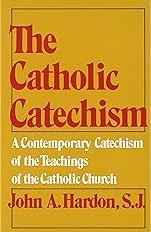
He did write, "cantare amantis est… Singing belongs to one who loves" (s. 336, 1 – PL 38, 1472). This is the citation for qui bene cantat bis orat in the primitive edition of the Catechism of the Catholic Church (CCC) 1156.
But this is not the end of the story, folks!
In the Latin edition of the CCC we are sent to footnote n. 26 (oddly, this is note 21 in the newer English edition, which adds a confer reference to Col. 3:16 – which is not in the Latin CCC). Latin CCC 1156, note 26 reads:
Cf. Sanctus Augustinus, Enarratio in Psalmum 72, 1: CCL 39, 986 (PL 36, 914).
Surprise surprise, I just happen to have CCL (= Corpus Christianorum Latinorum, a vast series of volumes of Latin authors) vol. 39 at hand. Looking up that reference, we find what Augustine really said:
Qui enim cantat laudem, non solum laudat, sed etiam hilariter laudat; qui cantat laudem, non solum cantat, sed et amat eum quem cantat. In laude confitentis est praedicatio, in cantico amantis affectio…For he who sings praise, does not only praise, but also praises joyously; he who sings praise, is not only singing, but also loving Him whom he is singing about/to/for. There is a praise-filled public proclamation (praedicatio) in the praise of someone who is confessing/acknowledging (God), in the song of the lover (there is) there is deep love.
This is a very interesting passage. Augustine is saying that when the praise is of God, then something happens to the song of the praiser/love that makes it more than just any kind of song. The object of the song/love in a way becomes the subject. Something happens so that the song itself becomes Love in its manifestation of love of the one who truly is Love itself.
However, it does not say qui canit bis orat. There seems to have been some confusion of the verbs laudare and orare.